

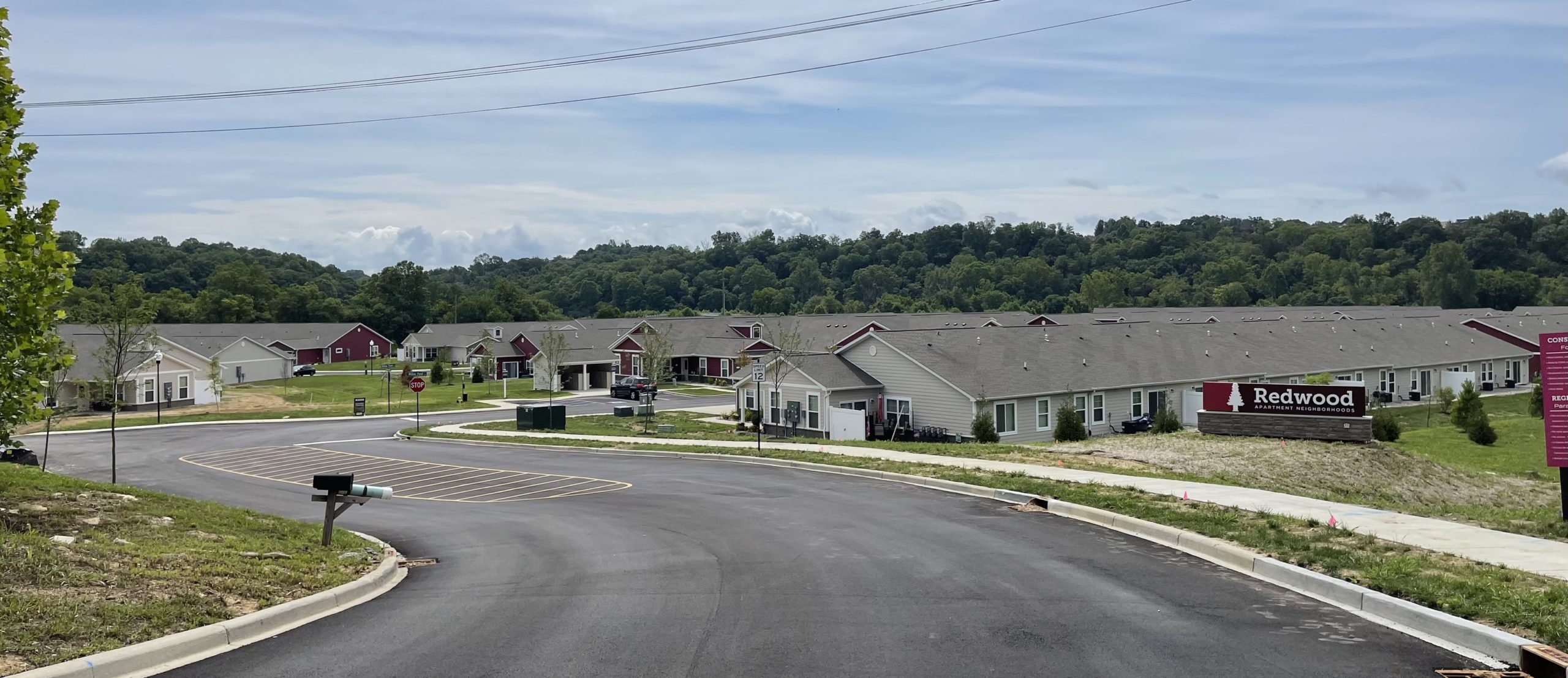
Sustainability is quite a buzzword in the current cultural context and its application varies greatly among different professions. Here at Mindel Scott, we consider sustainable infrastructure to be the foundation of a thriving community, which means the work we do as Civil Engineers, Landscape Architects, Site Planners, Technicians, and Land Surveyors is crucial in creating a more sustainable Louisville and community.
Sustainable infrastructure doesn’t just focus on combating climate change, but also preserving natural ecosystems, using native and drought tolerant plants, and utilizing the latest technology to create solutions that have a positive impact on the environment and community for years to come. This is how we incorporate sustainability into our work and why it’s important.
The Importance of Sustainable Infrastructure
Infrastructure, or the built environment, includes the basic physical structures and facilities that keep modern life afloat like buildings, bridges and highway systems, sanitary sewer and stormwater systems, dependable electricity, waste collection, and clean drinking water. These structures and systems are critical to public health and economic growth. When they are broken or don’t work as intended, it can be detrimental to thriving communities.
Every four years, The American Society of Civil Engineer’s releases a report card for America’s infrastructure. The latest one, released in 2021, gives America’s infrastructure a C-. It’s not a failing grade but leaves a lot of room for improvement. When it seems like all we can do is barely keep up, how do we ever get ahead?
The International Institute for Sustainable Development defines sustainable infrastructure as “developing roads, buildings, energy and water infrastructure with due consideration to economic, social and environmental implications.” With this definition in mind, sustainability is at the core of everything we do at Mindel Scott. From site selection and planning to stormwater management and water quality maintenance, we create sustainable infrastructure solutions in every project we take on.
Examples of Sustainable Infrastructure at Mindel Scott and Beyond
Almost every project passes through our Planning and Landscape Architecture department where sustainable choices are made in site selection and land development. If we start from the beginning stages of project planning, we can offer expert advice in choosing the right site for new builds, which is critical in ensuring the land is suitable for the intended use. If it isn’t, you could risk building on land that would create more problems down the road and be more expensive to maintain, which wastes a lot of resources. Sustainability isn’t just about reducing, reusing, and recycling. It’s thinking ahead and planning to be sustainable and saving resources when and where we can. We use the least number of resources required in every project from limiting the number of structures and pipes built to controlling how much concrete is needed.
When possible, we also reclaim existing infrastructure and turn it into a sustainable and usable part of a space. Our Ballard High School project is a good example of this. They had an outdoor space on the East end of the school that was home to a 7,400+/- square foot concrete patio. The circa 1960s patio needed renovation to address pedestrian safety concerns, to assist with stormwater runoff into an existing overwhelmed detention basin, and to meet the ever-changing activities and needs of the students. The landscape architect-led project team proposed a flexible design that would allow for versatile programming while also working with the natural features of the site instead of fighting against them. The original impervious patio and seven-foot concrete retaining walls were replaced with a permeable paver patio and a series of shorter terraced walls, creating space for the school community to gather while also bringing vegetation back into the area to assist with stormwater runoff. A new ADA-accessible path was designed to connect the school with the new outdoor space and existing walkways that lead to the city’s transit routes. The updated outdoor area is an inclusive and sustainable step forward from the Brutalist concrete design that dominated the space for decades.

On a national level, the High Line in New York City is a great example of this as well. While we didn’t play a part in creating the space, it’s inspiring to see how community members came together to protect the old railway from demolition and turn it into a dynamic and sustainable public space. It represents a transformative project that repurposed an old, elevated railway into a green urban park. By reclaiming existing infrastructure, the project not only preserved a historic structure but also introduced green space into a densely urban environment.
Green Infrastructure in Louisville
A challenge associated with infrastructure development lies in the transformation of natural landscapes, such as forests and meadows, into urban areas featuring buildings and pavement. Consequently, when it rains, water collects pollutants such as oil, pesticides, and bacteria as it drains off these constructed surfaces. This contaminated water then flows into drains, ultimately reaching and impacting lakes, rivers, and the ocean.
Green infrastructure employs a combination of plants, soils, landscape design, and engineered methods to capture, absorb, and mitigate the impact of polluted stormwater runoff. By doing so, it effectively curtails or lessens the volume of runoff entering storm drains, serving as a crucial resource for cities dealing with challenges like combined sewer overflows. The many advantages of green infrastructure extend beyond environmental considerations, such as improvement in surface water quality, water conservation, and improvements in aesthetics and property values.
We implement green management practices in every project to ensure water quality. We optimize stormwater management by using existing infrastructure (gray infrastructure) that manages stormwater runoff like gutters and pipes with solutions that mimic nature and captures rainwater where it falls like rain gardens and permeable pavement (green infrastructure). By combining gray and green infrastructure systems, we can lessen the burden on gray infrastructure and create more sustainable solutions through green infrastructure systems to naturally filter out pollutants.
Additional Sustainability Measures
Sustainability reaches far beyond just green infrastructure. The projects we work on have a direct impact on the community by creating jobs, bringing more customers to local businesses, and enhancing social and economic benefits. Our designs create sustainable communities by providing connectivity between the places that we live, work, and play via pedestrian access, walking trails, roadway systems, and more.
For all these reasons, the work we do is important to modern society. Incorporating sustainable practices into the work we do is vital to crating sustainable infrastructure that contributes to a healthier, safer, and growing community. Continue learning about the work we do on our Projects Page.